Kegalle, Sri Lanka · Established 2015
Ethical care.
A better life for Sri Lanka's elephants.
We take domesticated elephants out of a life of hard labour and give them food, water, medicine and space — so they can graze, walk and bathe at their own pace.
Established 2015
A family-run project
Mawanella, Sri Lanka
In the hills near Kandy
No riding, no touching
Observation, not entertainment
Welfare first
The elephant sets the pace
Our purpose
A project built around the elephant, not the visitor
Elephant Care Relief is a family-run project in Sri Lanka with a single focus: the physical and mental health of domesticated elephants. These animals are among the most vulnerable in the country, and we are determined to change the conditions they face.
Our aim is to create a place where they have space to roam, are looked after in every aspect of their health, and never have to live in fear again. We want to show others in Sri Lanka that these elephants deserve our respect.
Why they need us
The reality for a working elephant
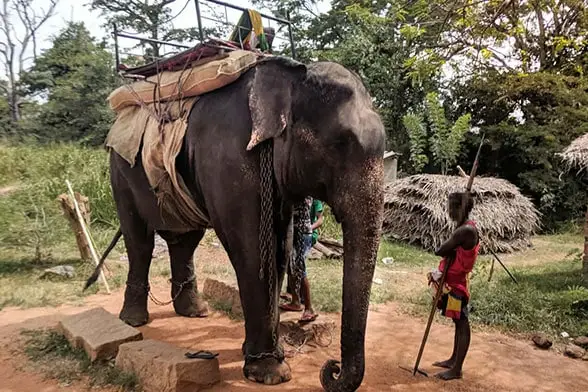
Sri Lanka is home to roughly 3,000 elephants, and around two hundred of them are domesticated. They are forced to work from morning to evening, with limited food and water, and are controlled by force.
- ~200
domesticated elephants in Sri Lanka
Out of roughly 3,000 in the country. A small, extremely vulnerable group.
- 350kg
of timber hauled from inside the forest
Carried out using only their mouths, day after day.
- 55
the age many never live past
A working elephant’s natural lifespan is 55 to 80 years.
And they cannot simply be released. Without the maternal teachings of a herd — migration routes, how to find food, how to breed — survival in the wild is near impossible. That is what makes projects like ours necessary.
What ethical care means here
Five things we hold to. None of them are glamorous, and all of them cost money — but together they are the whole point of the project.
Physical wellbeing
Enough food, clean water, and medicine — the things a working elephant is routinely denied. Volunteers collect fresh food daily and prepare vitamin balls.
Mental wellbeing
Elephants suffer depression and anxiety, and show stereotypical behaviour when their minds are neglected. Time, space and routine matter as much as food.
Natural behaviour
Grazing, walking and bathing at their own pace. Our elephants are not asked to perform, pose or carry anyone.
Respect and freedom
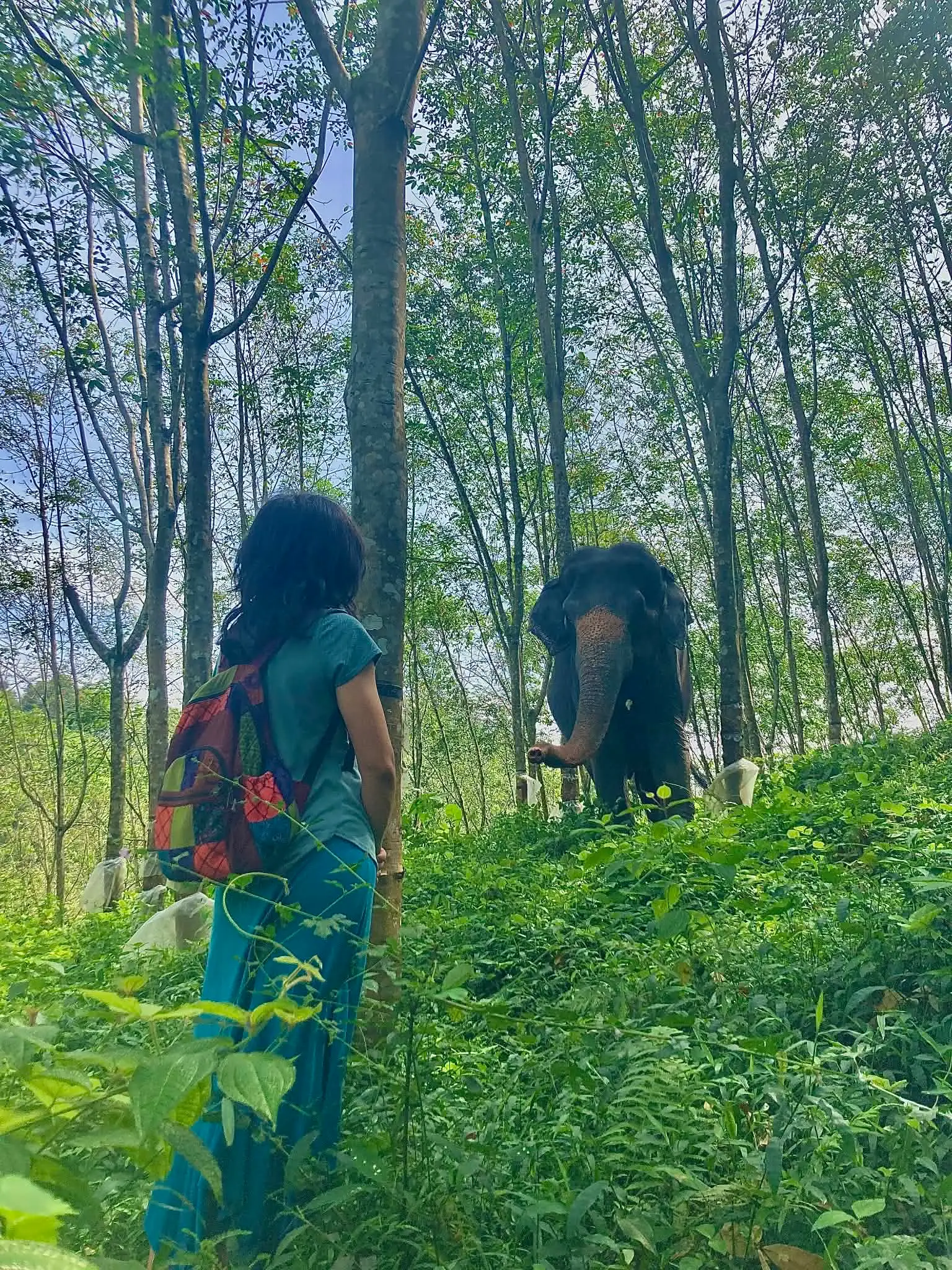
No riding and no touching. Visitors observe and learn, and adapt to the elephant rather than the other way around.
Long-term care
Releasing these elephants into the wild is not possible — without the herd they never learned to survive there. Care has to last a lifetime.
“The life, health and happiness of the elephants is more important than making a profit through them.”
Amarasiri—Project Founder
Every elephant here has a history
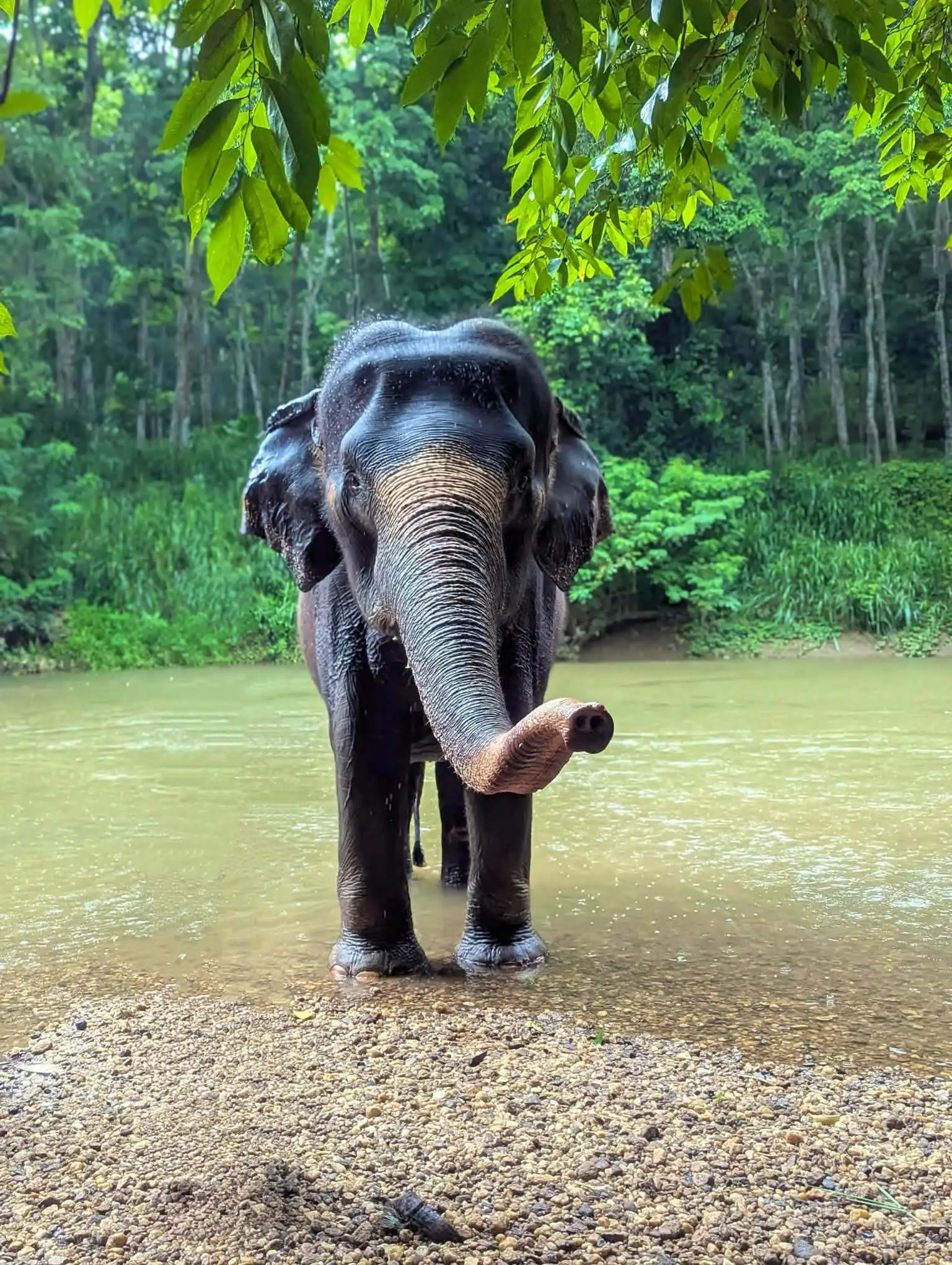
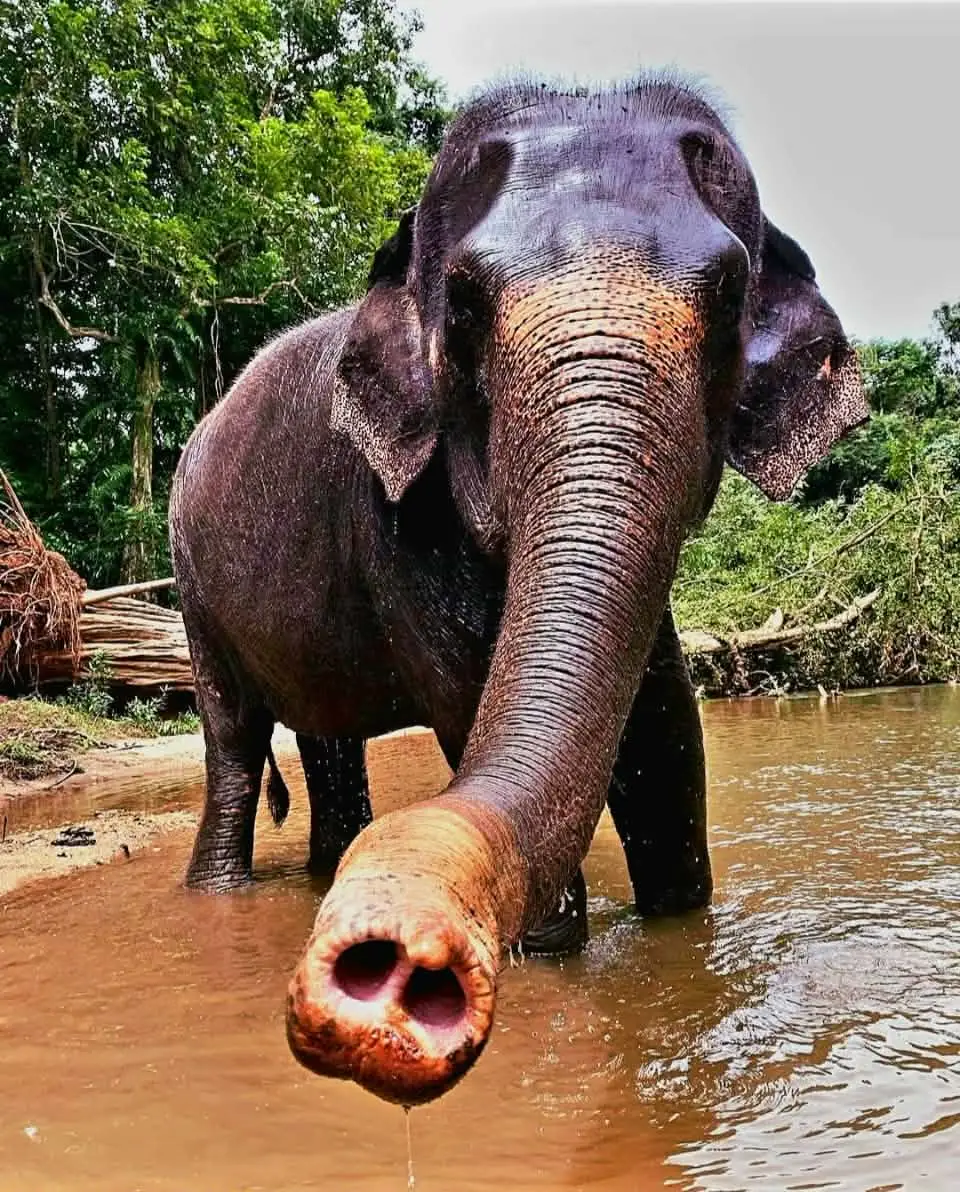
Our elephants came to us from lives of hard labour and tourism. Some have been with the project for years; others we have loved and lost. Each one arrived with their own history, their own health needs and their own character.
They are cared for alongside their mahouts — because rescuing an elephant should never put a person out of work. Changing that relationship for the better is the whole point.
A note on chains
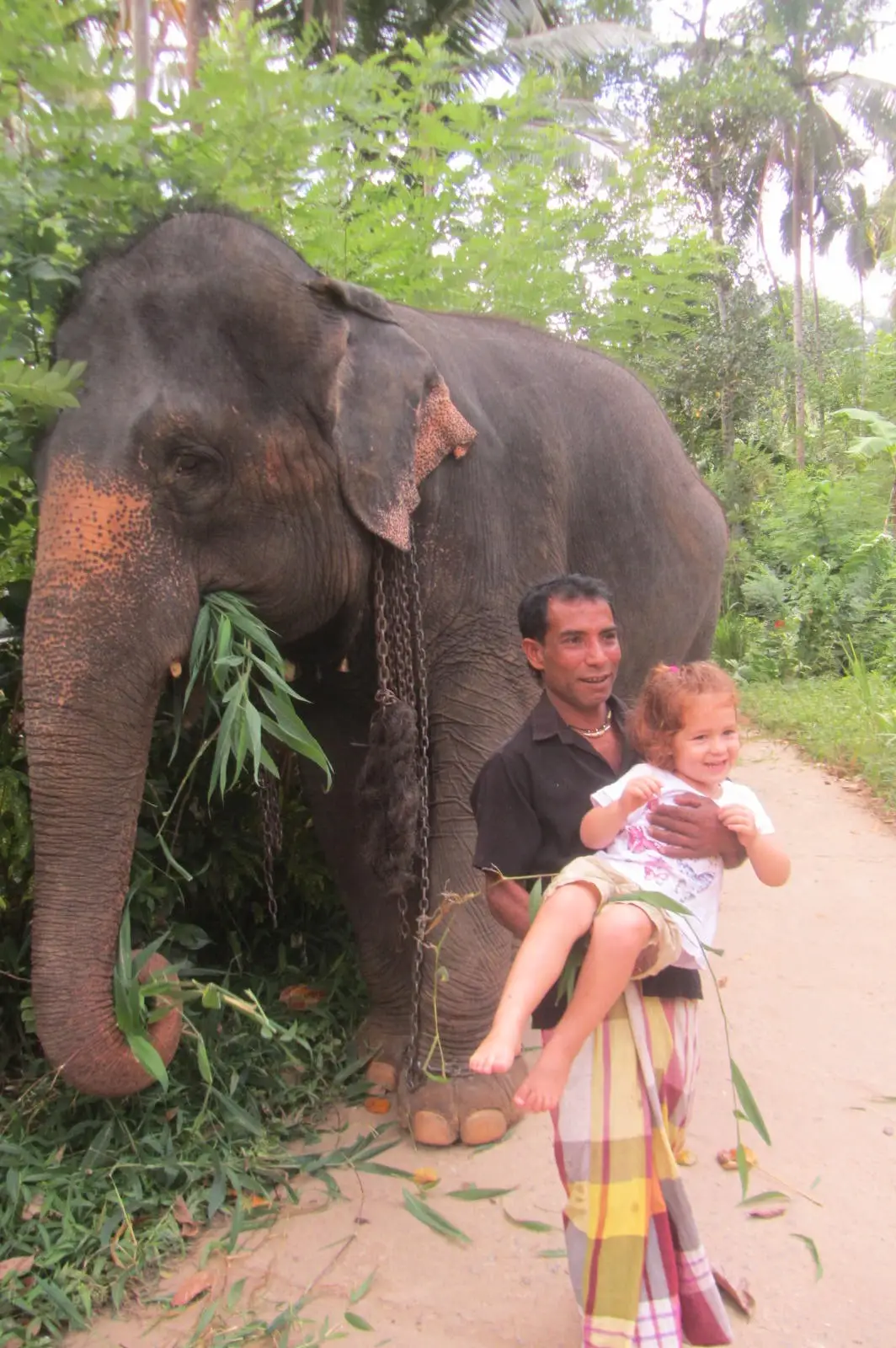
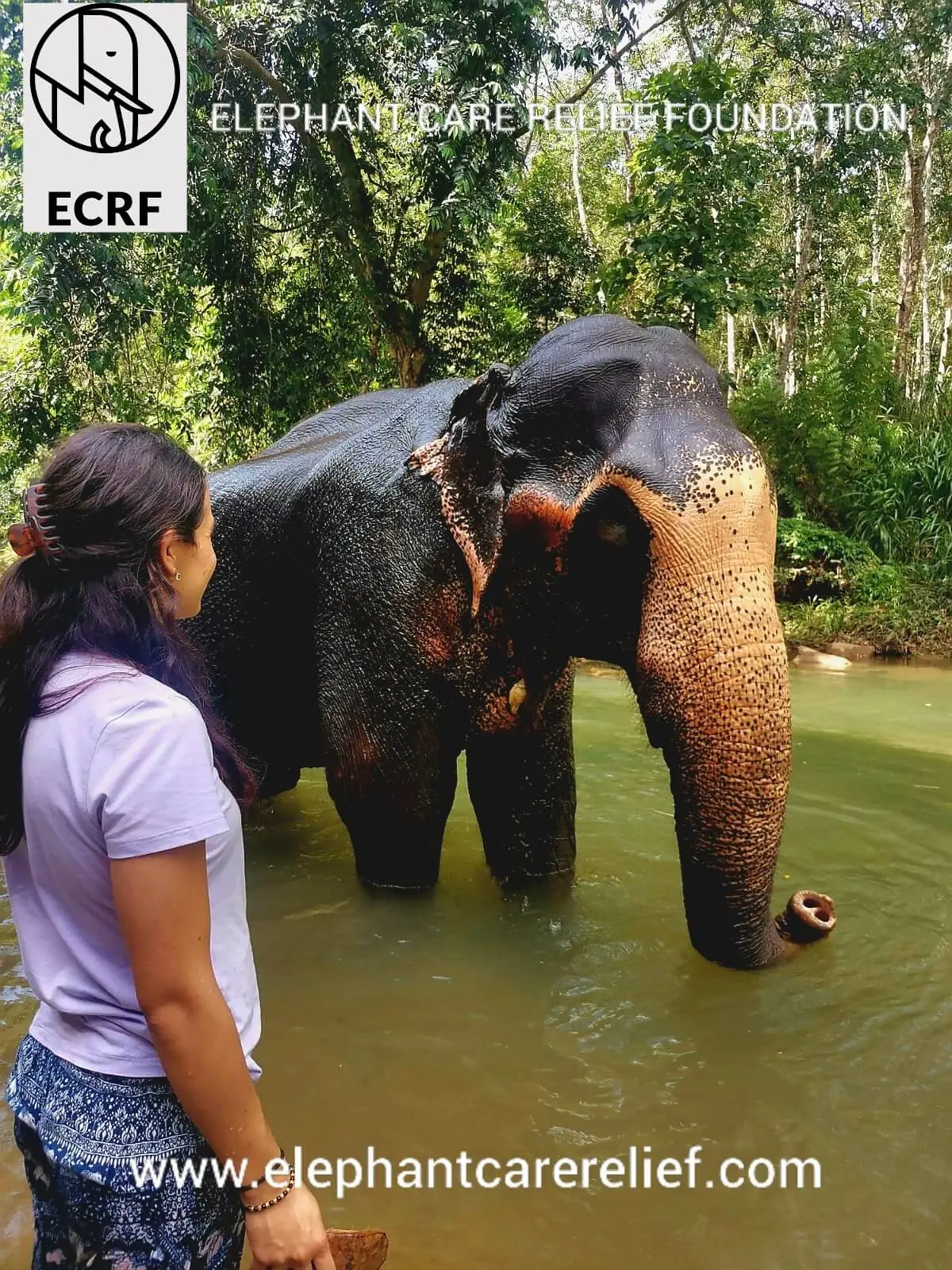
When new elephants come to us, they arrive in heavy chains and in a very stressed state of mind. At first we have to keep the chains on, until we can change that aggressive mindset into a relaxed one. This takes weeks or months, and it differs between males and females. Here is the difference it makes.
Mali
Raja
A day with them
Spend a day with our elephants
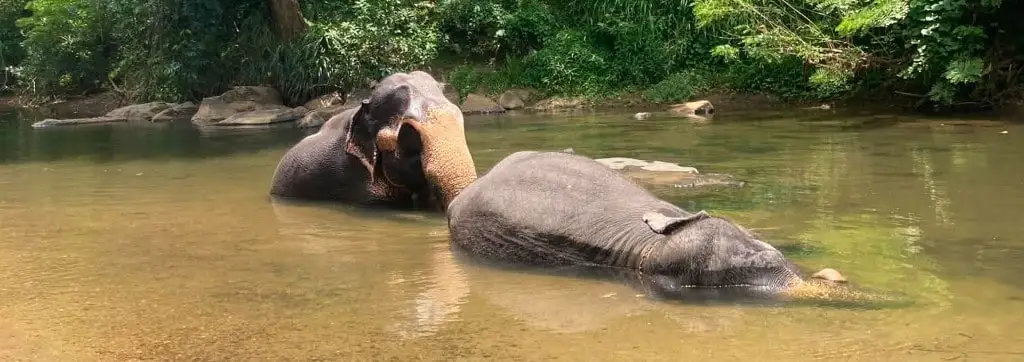
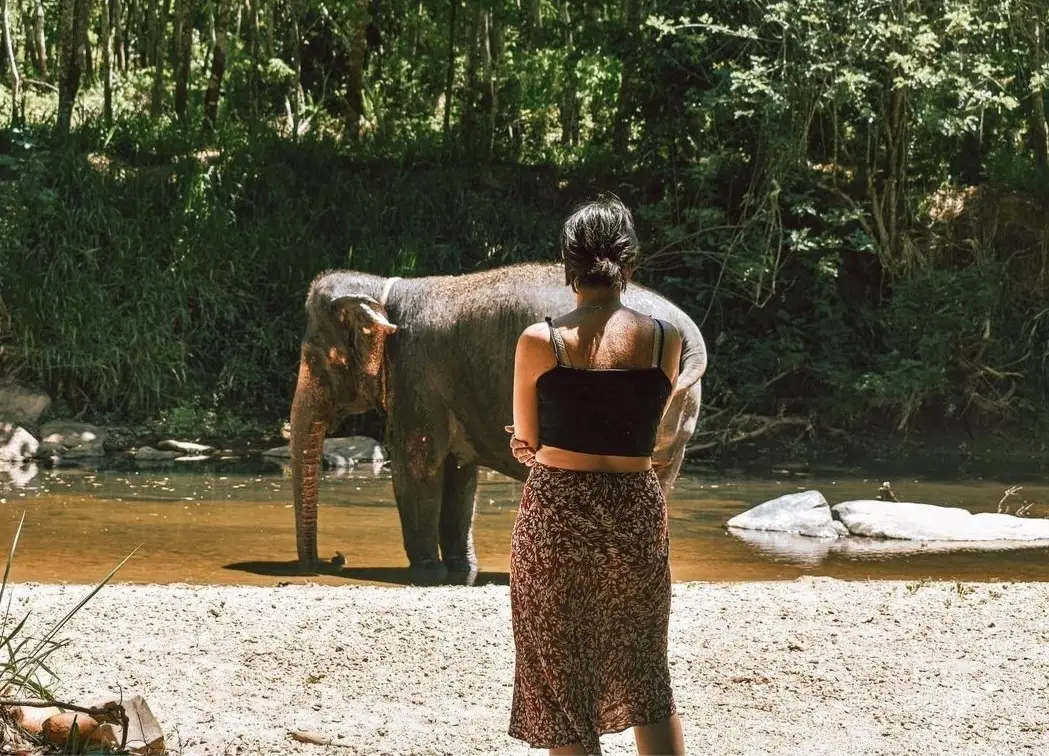
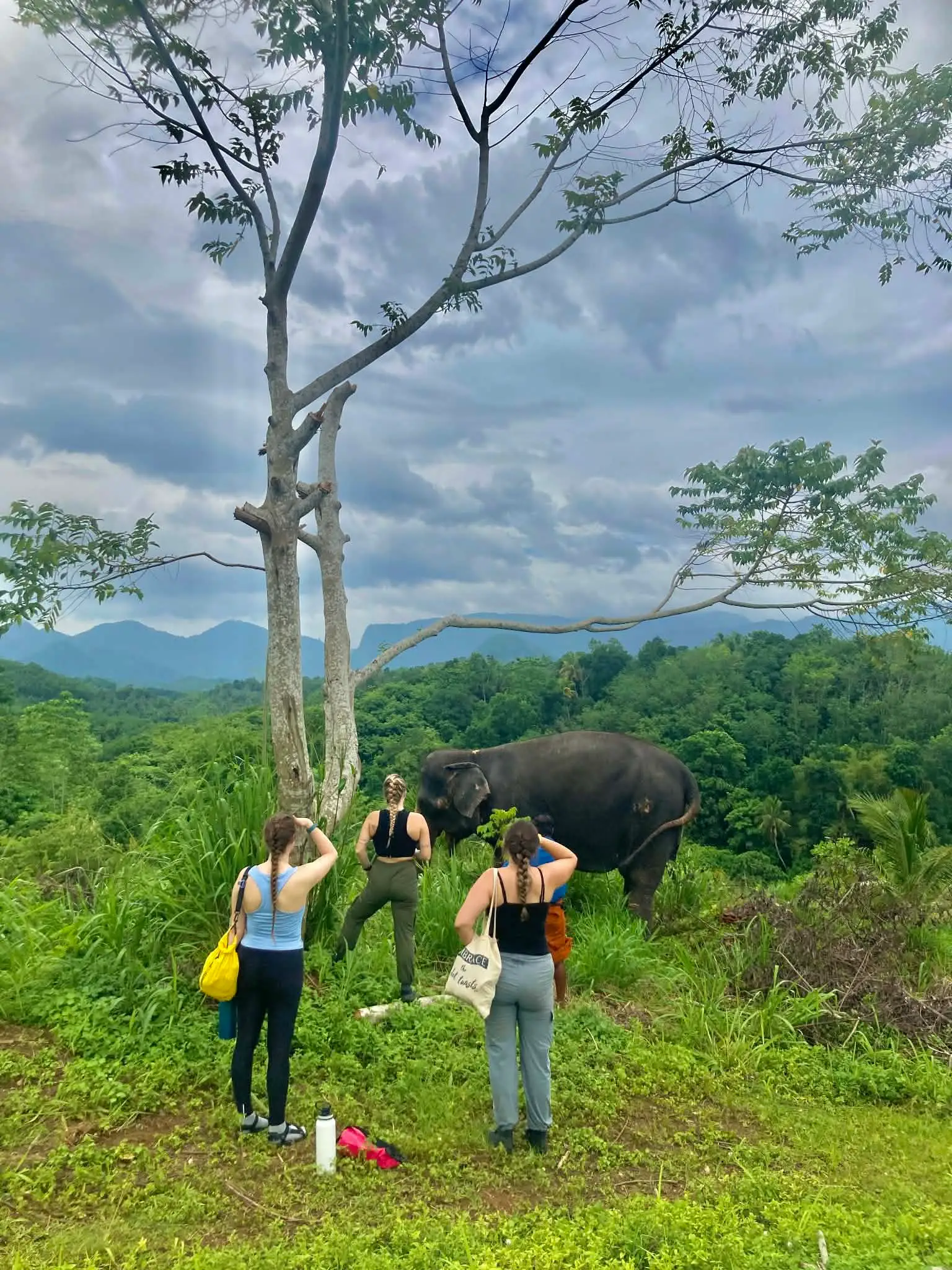
A day at the project is not a show. You watch the elephants graze, walk with them down to the river, and eat lunch on the bank while they bathe.
€40per adult
Children under 12 half price. Children under 3 free.
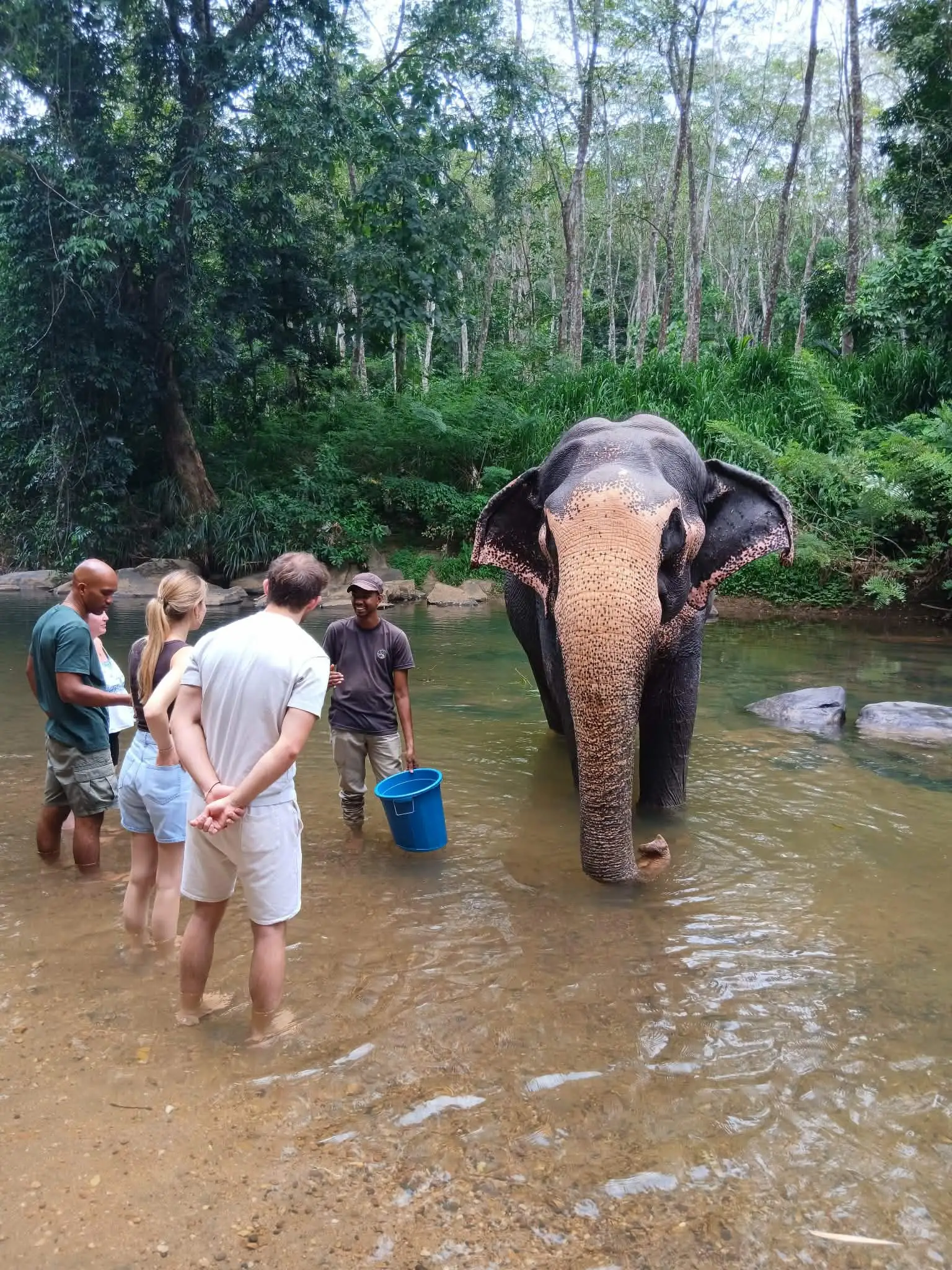
01
Arrive
Meet at the project location and drive out to where the elephants are grazing.
02
Meet
Watch them graze while we explain the project and introduce each elephant. Ask us anything — we are always happy to educate.
03
Walk
As the sun climbs, we make our way to the river. The elephants go at their own pace, so we arrive first.
04
Observe
Fried rice and short eats by the water while the elephants bathe. Most dietary needs can be catered for.
05
Care
Feed the elephants the vitamin balls our volunteers prepared that morning, and take photographs from the riverbank.
Real work, behind the scenes
Volunteering here is hands-on and unglamorous in the best way. You collect food from the jungle, clean the elephant beds, replant grasses and roll vitamin balls.
Every Wednesday is an education day, where we show you honestly what domesticated elephants in Sri Lanka face — so you understand exactly what your work is for.
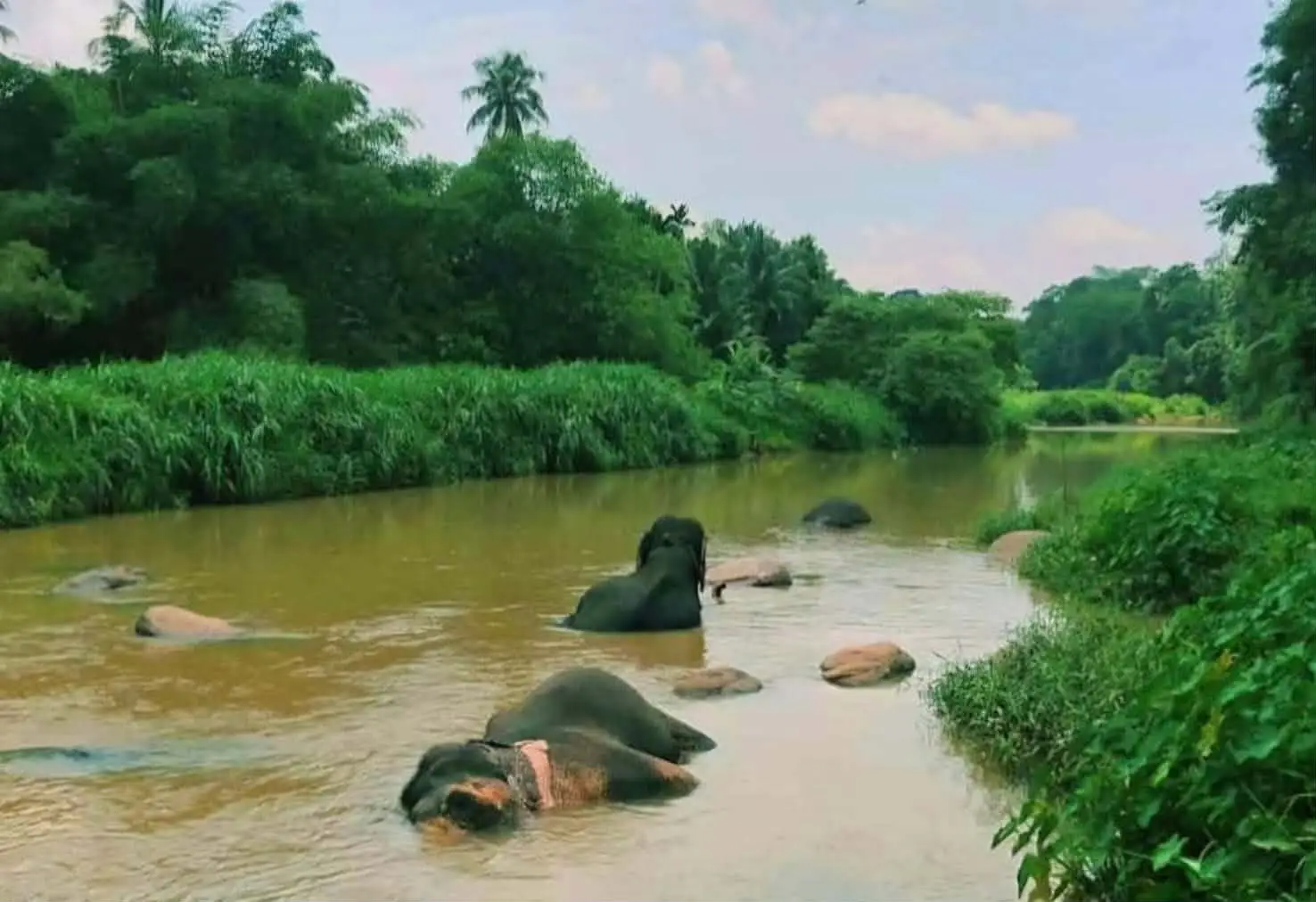
To create an ethical space where domesticated elephants can be cared for properly — mentally and physically healed, safe, free, and spared the harsh conditions they are forced to face.
We receive no government funding. The project is self-sustained, which means it stands on visits, volunteers and donations — and nothing else.
Where your donation goes
No government funding reaches this project. The main cost we always pay is elephant rental — more than €1,000 every month for one elephant.
Donations cover that rental, then food, mahouts and the running of the project. When monthly costs are covered, income from day trips and volunteering can go straight back into the facilities instead. That is how we build something better for these elephants.
- Elephant rental
- The largest cost we always pay — more than €1,000 every month for one elephant.
- Mahout costs
- Every elephant has a handler with them every day.
- Food
- Collected fresh daily, plus the morning vitamin balls.
- Medicine
- Treatment for damage done by years of hard labour.
- Salaries
- The team who keep the project running between visitors.
We rent our elephants rather than own them — they sell at an exceedingly high price and our funds are small. Rental alone is more than €1,000 every month for one elephant. It is why we depend on you so completely. More questions answered
Frequently Asked Questions
Questions about visiting, volunteering, and how we care for our elephants.
When is the best time to visit Sri Lanka?
For the south, the middle of the country (where we are) and the west, December to April is the best time. Monsoon season arrives around April, and the best weather — rarely dropping below 25°C — is usually around January. The north and east are best visited between May and October.
What is a mahout, and why are they needed?
A mahout is a domesticated elephant’s handler — an inherited role. They command elephants through a specialised language and are with their elephant every single day. The traditional ideology is to control the elephant through force, torture and starvation. That is a practice we are actively trying to change, and one we have already changed with Mali’s mahout, Samandha. Mahouts stay with their elephants, because rescuing an elephant should not put a person out of work — changing that relationship for the better is the way forward.
What is a bullhook?
A bullhook is the main tool of elephant domestication in Sri Lanka, and something we want to abolish from our project entirely. Because we run the project inside a village, we have to have one present for the local community’s peace of mind. We NEVER use it on our elephants — it is only there for show. When our elephants are grazing or in the river it is not in sight; it is only present when walking to and from their beds.
Why are elephants rented and not owned?
Sri Lanka is very different to other places in Asia when it comes to elephants. Because of the way domestication came about, and how few domesticated elephants there are, they have always sold at an exceedingly high price. We are a small project with small funds, so owning is not an option for us yet. We hope to change that, and it is why we rely so much on you — donations, day trips and volunteering are the backbone of the project.
Do I need a special visa?
No special visa is needed, even for an extended stay. You need a tourist visa, which can be obtained online on the Sri Lankan government website — make sure you state that you are coming for a holiday, or you may not be permitted to enter. We are happy to help advise, though we cannot give legal advice. If you are staying longer than a month, tourist visas can be extended at the immigration office in Colombo.
Will I have time for extra activities?
Yes. Activities are included as part of your volunteering so your stay is broken up into an enjoyable experience, and you get to explore one of the lesser-known areas of Sri Lanka. If you stay longer than a week, weekends are designed to give you plenty of free time.
What visitors say
Reviews from Google
4.9out of 5
Elephant Care Relief Sanctuary
Giuseppe Munno
We had the greatest honor of meeting the wonderful Nera at the Elephant Care Relief Foundation project (ECR) in Kegalle. After a bit of research before our trip to Sri Lanka, we learned about many of the elephant orphanages not ethical and just using elephants for people’s enjoyment and for money, often exploiting elephants or mistreating them. However, here at the ECR, elephants are loved and treated properly by these amazing people and volunteers. We met Mali - a 43 years old elephant - who’s granted the treatment and care she deserves. She’s fed well and properly, bathed, scrubbed and all in total freedom. You can watch her, even feed her snacks, and just enjoy her while she lives her life freely. We leave with a light heart knowing that some good people exist and try to make the lives of these beautiful animals as good and happy as possible. I recommend joining this project and choosing the ECR. You can contribute to the well being of these beautiful creatures. All the best. Buona vita, Mali!
Cam Duncan
I had the absolute pleasure of volunteering on a project with the Elephant Care Relief Foundation (ECR). Unlike other projects in the local area that claim to be “ethical” yet still provide services that distress or harm elephants, ECR offers an experience that is both educational and truly meaningful. You learn exactly how elephants should be treated, and you put in some rewarding hard work to ensure they are well cared for. We spent the week looking after Mali, who lives in total freedom and is thoroughly spoiled with bananas, and coconut leaves. I want to express my heartfelt gratitude to Amarasiri, Neranjan, Myszka and the rest of the family for making the week so enjoyable and for welcoming my partner and I into their home. Their hospitality, and the incredible traditional food, will be forever treasured. I couldn’t recommend this experience more. If you are interested in making a real difference in elephant welfare, this is the place to go!
Matilde Ruggiero
I feel very lucky to have participated to this project,I learned so much about domesticated elephants and their life here.It was the first time for me traveling alone outside Europe, and with Neranjan and Amarasiri, the family, and the people around I felt so safe and welcomed.They introduced me to their culture with open arms and open heart.They were all the time available to answer questions, explain the project with authenticity.There is a lot of effort and love in their work and purpose, a lot of respect for the elephants.. and this was inspiring.We did a lot of activities and I spent a lot of time with Mali❤️and the food was really good and traditional. I really recommend this place and to participate to the project.
Rebecca Martin
It was such a wonderful education and experience to share with my family of 6. We got to spend time with Mali in her environment and see what it takes day to day to support her through adequate food, hydration and natural habitat support. Near and his family were extremely generous and the food was incredible also. It feels good to do something for someone and I know they hope to be able to care for many more elephants in the future with proper funding and project support.
Aris Siorentas
Very unique and positive experience! I was hosted by the program for volunteering, and the organisers were truly helpful, warm, friendly and insightful. The interaction with the elephant(s) was amazing, and their cause to help relieve elephants, is truly inspiring. The activities included gathering food from the forest, spending time with the elephant (Mali) in the forest and feeding her at the river. Overall, I had an amazing time.
Arianna Pasqualone
Unforgettable experience. Our group of 14 had an extraordinary time, and everything was seamlessly organized. The adventure began in the relaxation area, where we were introduced to Roger and Marley, as they enjoyed their meal. Afterward, we took a short 10-minute walk to the river, where we had the chance to swim alongside these gentle giants and even feed them. Lunch was provided and we ate while watching the elephants peacefully rest in the river. A big thank you to Myszka and the entire team for making this incredible experience possible!
Katherine Sleeth
Absolutely worth a visit! Had a fantastic experience with Amarasiri and the Elephant Care Relief Foundation spending time with Mali 🐘. Based on our research into 'sanctuarys" the ECRF seemed to be the only cruelty free one in the area and we were not disappointed. Amarasiri and the Mahout clearly care for the elephants and want them to have a better life. We decided to visit the sanctuary last minute and Amarasiri was very accommodating. He spoke good English and was able to talk to us about elephant care and answer all of our questions. We spent about 2.5 hours with Mali. The day we visited there were only two other tourists so it was a very intimate experience. While you can't ride or feed the elephant, we were able to to brush her down while she subathed in the creek. 🥰 A cooked lunch was provided. Note the actual location of the elephants was ~30 minutes away from where the location is on Google maps.
Astrid Mondejar
I volunteer for 1 week in the project and I could see they work so hard to take the elephants out of logging and tourism industry and give them a good life. It is the MOST ETHICAL project I have ever been too. You can see it’s not sanctuary business either. I highly recommend it!! Plus, I could stay at their house, they treat me like a member of the family and I ate the amazing local food cooked by the mother. They are super kind, generous, big hearted and also funny. I recommend 100% this and I wish much more people can contribute to their amazing project and dream for the future of the elephants 🫶🏽
Amelie König
Unforgettable experiecene! I stayed with the ECRF for 1 week and was really impressed by the work they are doing. Other than many other projects around Sri Lanka this one is by far the most ethical one and it is really all about the well being of the Elephant. The family organizing the project is super super kind, helpful and also very fun to be around! I would recommend everyone who gets the chance to join to project to do so! 10/10